

Menu

Ready today

NG-Key

Production-ready cloud platform for classic and mobile credentials including LEGIC and DESFire, controller-free reader architectures, offline-capable operation, OSS-SO-compatible integration paths, WebAuthn/FIDO2-oriented trust, verifiable audit trails, and operational control.

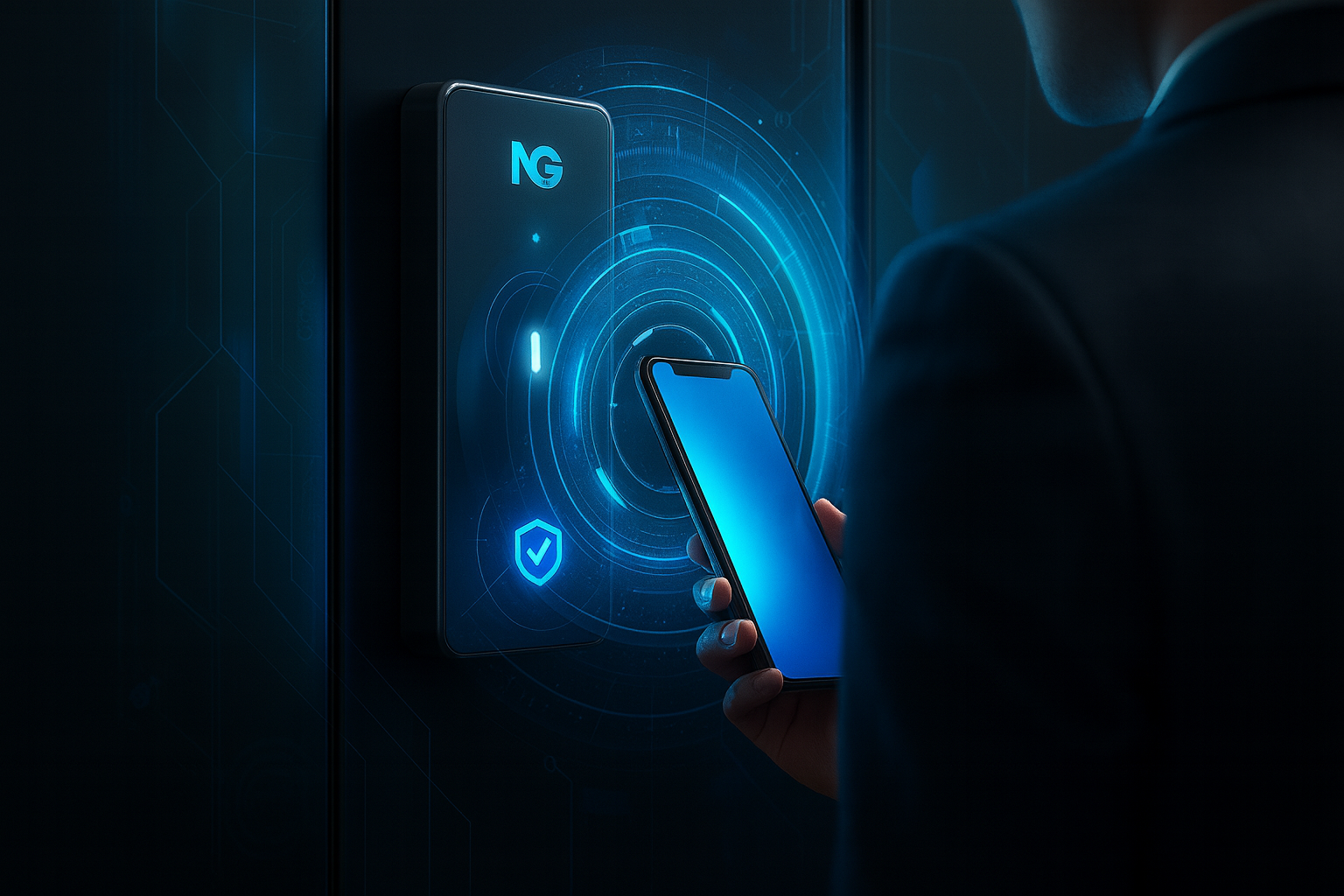
NG-Key is the ready product in the ecosystem today. It is designed for projects that need classic and mobile credentials, managed readers, WebAuthn/FIDO2-oriented trust, OSS-SO-compatible integration paths, controlled rollout workflows, and reliable audit visibility in one access platform. A decisive advantage is that many scenarios do not require separate controllers, while reader-local decisions continue during WAN disruption. That turns the cloud into a real operating surface for rollout, administration, monitoring, and multi-site scale, while field communication, queue processing, and admin workflows can grow independently. What matters technically is that credential lifecycle, reader provisioning, telemetry, audit events, classic LEGIC and DESFire card estates, WebAuthn-oriented enrollment moments, and ledger verification are not treated as unrelated side channels. For channel delivery, NG-Key is complemented by a separate reseller workspace; in addition, the reseller platform is intended to expose API-driven flows so onboarding, project progression, and handover can integrate into partner CRM, ERP, PSA, or OSS-SO-oriented host systems.
LEGIC DESFire FIDO2 WebAuthn NFC credential OSS-SO Ledger trail AI Ops
NG-Key

Architecture

Controller-free, reader-local, and offline-capable

Integration

OSS-SO, APIs, IAM, and event flows

Cloud operations

Rollout, monitoring, and multi-site control
NG-Key

LEGIC DESFire NFC credential FIDO2 WebAuthn OSS-SO MQTT Ledger

Scenarios

Where NG-Key fits especially well

Production-ready cloud platform for classic and mobile credentials including LEGIC and DESFire, controller-free reader architectures, offline-capable operation, OSS-SO-compatible integration paths, WebAuthn/FIDO2-oriented trust, verifiable audit trails, and operational control.

Scenarios

10

Status

Ready today

Focus

OSS-SO, APIs, IAM, and event flows

01 LEGIC

Scenario 01

Office and tenant access without separate controllers

Controller-free, reader-local, and offline-capable

02 DESFire

Scenario 02

Side entrances, gates, and special areas

OSS-SO, APIs, IAM, and event flows

03 NFC credential

Scenario 03

Temporary credentials for contractors and visitors

Rollout, monitoring, and multi-site control
04 FIDO2

Scenario 04

LEGIC and DESFire brownfield estates with migration paths

Controller-free, reader-local, and offline-capable

05 WebAuthn

Scenario 05

FIDO2- and WebAuthn-oriented enrollment flows

OSS-SO, APIs, IAM, and event flows

06 OSS-SO

Scenario 06

OSS-SO-oriented host and integration scenarios

Rollout, monitoring, and multi-site control
07 MQTT

Scenario 07

Multi-site rollouts with central cloud control

Controller-free, reader-local, and offline-capable

08 Ledger

Scenario 08

Offline-capable reader decisions during WAN disruption

OSS-SO, APIs, IAM, and event flows

09 LEGIC

Scenario 09

Audit-sensitive sites with a verifiable event trail

Rollout, monitoring, and multi-site control
10 DESFire

Scenario 10

Reseller onboarding and customer delivery through channel teams

Controller-free, reader-local, and offline-capable

Credential lifecycle

Digital and classic credentials reduce card handling, replacement effort, and manual issuance overhead. Issuance, revocation, and change handling can align more cleanly with identity and operating processes.

Managed reader operations

Readers are treated as a managed fleet instead of isolated endpoints. In many architectures, separate controllers can be avoided while provisioning, status, telemetry, and controlled changes move through asynchronous operating paths. That scales better for larger fleets because broker communication, queue jobs, and the admin surface do not depend on one synchronous request path, and reader-local decisions can continue offline.

FIDO2, WebAuthn, LEGIC, DESFire, and NFC

Passkey-grade trust, WebAuthn-based authenticator moments, existing LEGIC and DESFire estates, and NFC mobile credentials together form a more realistic credential stack than generic card language alone.

Audit and monitoring

Changes, denied access attempts, reader state, and operational anomalies remain reviewable as canonical payloads that are hashed, signed, and chained to previous events. Ledger anchors, transaction hash, block number, and verification timestamp stay independently auditable, while the cloud keeps rollout, monitoring, updates, and multi-site operations visible and an AI-assisted operations brief only summarizes queue, reader, latency, and ledger signals for operators instead of replacing policy decisions.

Controller-free

Many scenarios run without separate controllers

NG-Key moves logic closer to the reader and reduces additional controller, cabinet, and cabling complexity where the architecture allows it.

Open integration

OSS-SO, APIs, IAM, and event flows instead of isolated silos

Real projects depend on interoperability. OSS-SO-compatible integration, APIs, IAM, and event paths help connect building, host, and delivery systems cleanly.

Cloud operations

Cloud control with offline-capable reader decisions

Provisioning, telemetry, audit, and operator-facing summarization belong in the same surface. At the same time, reader-local decisions can keep operating during WAN disruption.

Operator-facing AI analysis

AI

Operator-facing AI analysis

Queue, reader, runtime, and monitoring signals are condensed into conservative operator guidance.

Verifiable ledger trails

Ledger

Verifiable ledger trails

Hash-chained audit and state events with reviewable anchors make traceability more visible.

FIDO2, WebAuthn, LEGIC, DESFire, and NFC

Trust

FIDO2, WebAuthn, LEGIC, DESFire, and NFC

Passkey-grade trust, WebAuthn enrollment, and classic plus mobile credentials should be visible as one modern credential layer.